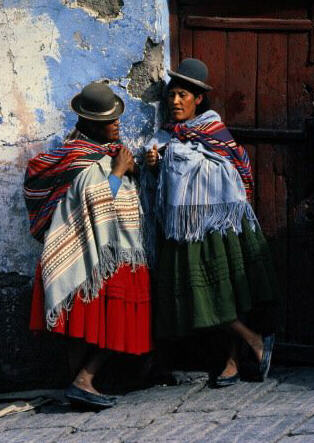
Friday, November 12, 2010

Colombia, Panama, Costa Rica and Nicaragua!


As always, I start this letter thinking to myself: where did I leave off? And as usual, I need to check through my email, find my last letter, and reread my incredibly long winded account of what I had been doing since I left Bolivia (even though I really just reread the last two paragraphs). It's been quite a ride these last few months (I guess I say that every time as well)... and I've begun writing my Adventures Through Colombia and the Southern Caribbean Sea (or something catchy and adventurous-sounding like that, but perhaps more clever). But I won't repeat last update's long windedness this time- that's another project. Instead, here's a more concise* version of what happened:

I seemed to have been an active audience member in my very own live Colombian telenovela, while kickin' in a nice little (they say it's dangerous, but they say that about everywhere, and really, it wasn't Compton or anything) district in Cartagena, which was where I had recently arrived when I wrote you all last.

I met a Brasilian woman who invited me to hitch hike from Cartagena to Turbo, find some boats somewhere, and make our way to Panama, somehow, tomorrow, because her visa was almost up, and that's how she said it, tomorrow, with like, 18hours to go. And I said yes. And it took us two days on land and two days at sea and four boats, that would be better called skiffs, but they're not wooden, and the best translation really is it's Spanish word, launcha, but we did. And we had lots and lots of crazy fun adventures on the way, and nothing bad ever happened that doesn't happen to all travellers, like consulates ripping you off, immigration officials taking bribes, and there not being ATMs around for days, 'cause all that did happen, but it was still a blast.

I stayed in a hippy den in Panama City for three weeks and had lots of good fun and went with my artisan friends to sell their art on the promenade, and we became good friends and went to the beach together, where I got caught in a riptide and had to go back to Panama City because I couldn't walk, and in fact was on crutches for a few weeks afterwards.

Recovered, mostly, I took off in the middle of the night for the Caribbean coast, the Bocas del Toro Islands, and stayed on deserted beaches and went to bat caves knee deep in water, watched the Giants win the world series in the one and only Latin American country that likes baseball, and partied on Halloween, you know, all that good stuff.

I crossed the border into Costa Rica on my birthday, which was actually my birthday gift to myself, leaving Panama, and changed time zones, once again giving myself a 25 hour birthday, which happens every once in a while back in the States with the time change, but wouldn't have happened this year, but I still made it happen, even abroad.

I stayed in a cool little hostel on the beach where they rented out hammocks for 4$ an night, but I stayed in a dorm, 'cause it was my birthday, and I deserved it, and it was a bad ass little dorm with it's own foyer and kitchen, where there were a Costa Rican, Argentine, and Spaniard staying as well, and we partied for my birthday and the Spaniard gave me a necklace.

Then I realised that I was allergic to Costa Rica, or perhaps it was a cold, but I didn't dig Costa Rica that much, so I'm going with the former. I left the beach for San Jose, even though I really didn't want to go to San Jose, it was the only way to go from the Caribbean to the Pacific, and I've been having loads of fun these last few months hopping from the Caribbean to the Pacific and back again, so I went to San Jose. I was only going to stay in San Jose for one night, because even though I probably could have gone straight to the Pacific, I didn't want to get there at night. At the bus stop I saw my Costa Rican friend, to whom I had just said goodbye, but he received a call right after I left from his friends at his house in San Jose telling him that they were having a party and he should come home, so he did. He invited me to stay with at his place, where there were already five gringo expats living, and him, and two Argentines that had also been at the same cool little beach hostel that we were at, but had left a few days earlier. Later that night arrived two Spanish chicks, also from the cool little beach hostel, and then two Americans, again, yeah you guessed it, from the cool little beach hostel, and there was a full house.

I ended up staying there three nights and three days, and it was nice. There was a cool American dude living there that I got to know fairly well, and he was pretty cute, but I had fallen for a Mexican in Panama, who wasn't the Peruvian that I was seeing while I was in Panama, but I really digged the Mexican and still do, even though he's travelling south and I north, so much to my own disappointment I found that I wasn't really into the American boy, even though he's smart and cute and we probably could have had a good time while I was there.

I finally went back to the Pacific to this fishing village, but it was less of a fishing village than a tourist trap, like all of Costa Rica, and too expensive, so I decided to leave Costa Rica after less than two weeks, 'cause even though there were more beaches I kinda wanted to see, they're all super expensive and touristy, and there are plenty more beaches in Central America, so I left.

I wasn't sure how I was going to get to Nicaragua, because the bus schedules are non existent, and planning is impossible, and the easiest thing to do would be to go back to San Jose and get on an expensive tourist bus all the way to Nicaragua, but I didn't really want to do that, so I asked around, and found out the best way to get to Liberia, and decided that I could speak Spanish well enough to man up, and take the convoluted but cheaper route on the buses that the locals take, so I did. And at the bus stop I met two guys trying to do the same thing, so we travelled together and it was fun.

The border crossing into Nicaragua was crazy, but not as crazy as the Argentine/Bolivia border, and we made it just fine. The two guys were way more susceptible to the ever present locals forcing services upon you then asking for 'tips' than I was, but it's cool, and actually ended up being a little helpful because instead of staying in a really long line to have our bags checked and then get on a tourist bus, we slipped out a back gate, for which we were charged a dollar by Nicaraguan officials, and got on a chicken bus (old US school bus, painted in bright colours) that cost next to nothing, which of course broke down, but then we hopped on a nicer bus and didn't have to pay the difference, so as usual, things worked out.

My new travel companions were headed straight to Honduras, and I to the beach, so I left them shortly after crossing the border, and made my way to the beach, where I now am. It's not the coolest beach on the planet, and there are no hammocks for rent on the beach, but it's a cool little town and I'm in a cool hostel, so things are all good. I found a private room with a double bed and private bath and almost stayed there, but decided that I didn't need to be anti-social because I've had a lot of relaxing time lately, and it's probably time to make new friends, so I went somewhere else where I pay the same price for a dorm without a private bath, but where there's a better vibe, and that's where I am right now.

There are so many details I would love to share, but I'll save those for another time.


*The long windedness will be supplanted by run on sentences, for a beautifully crafted run on sentence is a remarkable creation, a skill which I revere and am passionate about mastering, .

Friday, September 24, 2010

A Long Winded Account of the Last Few Months


I just looked through my 'sent-mail' and realised that I haven't written since mid July.  In my defence (not that I need one) I was actually doing some serious travelling (somewhat...  er, for me anyhow) and have finally slowed back to Jessica-pace.  So here's how it's been.
I finally left La Paz, Boliva, the last week of July, and headed to the fabled Lake Titicaca.  After seeing the famous Cerro Rico in Potosi, llama sacrifices, National Parks and the Salar de Uyuni, the Jungle and Pampas, and both the Country's official and functional capitals, I didn't realise that Bolivia still had something so magnificent to offer.
Sitting in the middle front seat in the colectivo, l literally gasped out loud when I first glimsed the vast lake, the highest navigable lake in the world.  The water is a brilliant blue whose mirrored surface reflects its surroundings in even greater glory than they naturally possess.  Though the surrounding hills were brown, dried out after centuries of cropping, it only served to magnify the glory of the omnipresent lake. When I arrived in Copacabana, the popular town from which to visit the lake on the Bolivian side, I was equally pleased. Though touristy, the lake served many more vacationers and locals than other places on theGringo Trail.  It was quaint, with the Basilica of our Lady of Copacabana, Catholic Church, dominating the village and lives of it's inhabitants, serving as a focal point of all town affairs.
I took the boat to Isla del Sol, and knew instantly why the Incas believed that it was the birthplace of the sun.  In fact, I'm half convinced it is.  The ruins themselves were more than disappointing, and Isla de la Luna was difficult and quite expensive to get to. Despite these initial disappointments, it was serene and breathtaking, and I stayed five nights.  I had actually run into friends in Cusco, Peru, afterwards who asked me what the hell I did in Copacabana for that long.
Well, I didn't do much, but that was the point.  My habitacion didn't have so much as an electrical outlet, let alone wifi, but for 20Bs a night (2.90USD) I had a light, coat rack, and private room with a double bed.  Everyday I went and sat at the same restaurant, had the same bad coffee, and talked to the same people: a Chilean, Argentine, and for the first few days, these amazing Canadians I met in the colectivo to Copa.  I had my first English-free day (even though there was this Brasilian who kept trying to flirt with me Enlish, that day I refused to let him ruin my Spanish streak and only responded to him in Spanish).   Both the Argentine and the Chilean were stereotypical South American hippies (yes, they're a bit different than North American hippies), and couldn't speak English.  The Argentine wanted me to travel with him, selling hand made jewellery.  He also wrote me a love poem in Spanish that was quite funny to me once I bothered to read it- if he weren't a little bit more crazy than most, I probably would have travelled with him for a while.

After two months working in the crazy bar of the party city, La Paz, living in a disgusting staff room with ten other people and never having private time, a week on the lake and a private room were what I needed.
At any rate, Lake Titicaca is also a border crossing into Peru.  So after 79 days on my 90 day visa, I left Boliva, a beautiful though poverty stricken land, for Cusco, Peru.  Cusco is the historical capital of the Inca Empire, and cultural capital of modern Peru.  It's situated in the Sacred Valley, and the home to the more traditional Andean cultures in Peru.  The city itself is remarkable for itsSpanish architecture and cobbled streets, and pleasant atmosphere despite being a major metropolis and pandering to tourists.

I was however, in a hurry to get to the beach after months inland, and couldn't wait to see the glorious Pacific again after more than 6 months. My second day in Cusco, I ended up heading straight for the famous Incan ruins, Machu Picchu.
During border crossing to Peru, I met these three UC Berkeley students travelling together.  One of them had just graduated, another finished a semester abroad, and one on holiday.  The were awesome kids, and it was refreshing to have them around, having conversations about the economic and political development of the countries we were visiting, rather than those of drunk backpackers which I usually heard.  The first time I woke up in Cusco, they told me that they were going to Machu Picchu that day, if I wanted to join.  Why not?  I had nothing better to do.  I had friends in town I could have met up with, but I felt that these were folks I would like to see the ruins with.
After a late start, we had to take a taxi the two hour- 80km drive through the Sacred Valley, to Ollantaytambo where we caught a one hour train to Aguas Calientes, or Machu Picchu, the town that sits on the Urubamba River at the base of the mountains upon which the ruins of Machu Picchu sit.  The ride in the taxi was amazing, and worth the extra money it cost us.  We talked in Spanish to our driver all afternoon.  He occasionally stopped to let us take photos, and gave us history of the land and politics of the region.  He became our tour guide, was intelligent and happy to talk.

On the train to Aguas Calientes, we met yet another American woman (ironic, for after so long in Bolivia where there were hardly any Americans, I found myself surrounded by them, speaking American English), who had just finished a Chilean internship and was on holiday before she looked for employment in Chile.  The five of us found a room that night, and decided to do the 3am trek up Machu Picchu so that we could arrive at the ruins in time to gain one of the 400 tickets that provide entrance to Wayna Picchu, ruins that overlook those of Machu Picchu.

Waking at 3:00am to hike up to Machu Picchu in the dark of night, monkeys screaming from within the canopy of jungle hiding the moon, in the rain, with no clue how many stairs I had to climb, was one of the coolest things I ever did.  By a quarter of four we were on the leisurely road to the gate at the bottom of Machu Picchu. It only took a half our, and we lined up until 5:00am when the gate opened.  Only the first four hundred visitors to the upper entrance gate to Machu Picchu were allowed to make the ascent up to Wayna Picchu, and the buses left the main town at 5:30am, to arrive just at 6:00 when the gates opened.  This meant that we had only an hour to hike the 2000ft up stairs, to beat the buses.  Usually the first load of buses held the last 50 people who made it in time to get the special ticket to Wayna Picchu.

The walk was incredible, difficult, but exhilarating.  Whereas it had started out as a race against those with whom we were walking, it quickly digressed into a team effort to simply beat up the buses. We had no idea how far we had to go, and no idea how long it would take.  Most of us were going on the limited information we heard from other travellers: get up at 3:00am, beat the buses, arrive before 6:00am.
When I heard the first yells of joy from the entrance I felt a rush of excitement and relief that was quickly cast away by the realisation that noise travels in a canyon.  I continued upward, slightly daunted, until I heard the next shouts but a few minutes later, and much louder and nearer than before.  I made it to the top for sunrise at a quarter til six, and a full 15 minutes before the first round of buses.
When the men came around with stamps to ascend Wayna Picchu, I learned I was the 105th person to the gate, with well over 500 people already behind me in line.  For this achievement, I earned the right to hike an even steeper set of stairs (1900 of them) at 7:00am.  It took us a little over an hour to climb.  Wayna Picchu were impressive ruins in and of themselves, the very staircase I climbed was an impressive feat for the Incas half a millennia earlier- they climbed it without the nice handrails that had been installed at the most dangerous points.  The view from there was incredible, gazing down upon the ruins and everything I had climbed that morning.
After 10 hours of hiking and walking, my legs felt like jello and I was exhausted.  I couldn't believe what good shape I apparently was in- all those months in Bolivia really strengthened my legs, and had me accustomed to not having a lot of oxygen in my lungs.
After returning from Machu Picchu, I stayed in Cusco for only a few more days before heading to Huanchaco, Peru.  Most people travelling the Gringo Trail stop in Lima, the capital of Peru, but I couldn't be bothered:  I was too anxious to get to the ocean, and to be warm, at sea level.  So I travelled 36 hours straight, through one of the most dangerous roads in South America.
I say most dangerous for two reasons.  First, crossing the Andes is always dangerous.  And because the routes are always so long, and buses are the main mode of transportation in South America, the buses usually run at night.  Furthermore, the risk of getting robbed along the way was a serious threat.  The route between Cusco and Lima was infamous for tourist and local buses alike being held up.  There is rarely an incident of injury, or bodily threat, they just take everything on the bus and then go.  Despite my fears, I couldn't rationalise paying for the flight, so I bought a ticked from the most reputable bus line, which cost much more than the rest.
It was probably the most comfortable bus I've ever been on.  On top of that, they had air-port like security getting onto the bus, filmed the faces of everyone onboard, and had gps tracking on the bus, in case it made any unapproved stops.  Though these precautions comforted me, they also confirmed how necessary they were.

That being said, I made it safely and without incident to Huanchaco, Peru, a tiny little beach town in the middle of the Peruvian coast.  It was grey and cloudy, slightly cold, and made me feel like I was home for the first time in months, looking out at Ocean Beach.  Damn, I missed the Pacific.
Huanchaco is known for surf, and is more popular with locals and surfers than other travellers.  There are other warmer beaches further north, where most backpackers go straight away, so I once again took advantage of some personal time, decompressing at this cold and empty town that made me think of home.  The best part of this place: they had coffee.  Good coffee.  Not instant coffee.  The best coffee that I had had since leaving the States.  It was expensive, but worth it, and as I knew that I wouldn't be getting that quality again for a long time; I splurged on it every day.

Finally I headed up to Mancora, the most popular beach in Peru, just hours south of the Ecuadorian border. Now, most folks know that I really don't need anything more than a nice quiet beach.  I don't really go out, so I don't need a big city or some poppin' night clubs.  Just a village with a good vibe, some street hippies thrown in for good measure, and I'm set.  All of which I had been promised in Mancora, and didn't really receive.  The town was small, but it was like it was trying to be Club Med on spring break, only not pretty or busy enough, and with way too much crime (if you walked too far up the beach, the chances of you being robbed by a man with a machete were 100%).  They had a Loki there, at which I was planning on working, when a better offer came my way.

As per usual, I found myself surrounded by Israelis.  Which is awesome, I get along with them wonderfully.  They are funny, usually have a guitar and Shesh Besh, or backgammon, and always have pot.  After a few days of hanging out with this group, we went on an awesome trip through a national park and to a mud bath on motorcycles and ATVs.  At the end of the day, a friend, Netanel, asked me if I wanted to join him on his motorcycle through Ecuador, and maybe Colombia.
We would ride, and camp, and play Shesh Besh.  It sounded like a much better idea than sticking around a town I didn't like that much, to work.  So a few days later I was off to Ecuador on the back of a motorcycle.
As it turns out, he was just as slow a traveller as I am.  We didn't even cross the border that first day, though it was only three hours away and we left at 10am.  To be fair, I had to buy a helmet, and he want to have the bike checked out, but with us it was always something.
Neti always wanted me to wake him up- I'm always up by 8:00, often by 6:00am.  And normally I wouldn't mind waking him up, save that he always yelled at me in Hebrew when I tried.  Eventually, I learned how to say, 'Enough!  I don't speak Hebrew!' in Hebrew, along with a few other handy phrases, that I would yell when he talked shit in Hebrew, or when I was with Israelis that were too stoned to remember to speak in English around me.  I learned the numbers 1-6, 'cause those are on a die, and we played hours of Shesh Besh a day. Incidentally, I also learned how to say, 'I'm (not) stoned.'  along with things like 'good morning' and 'good night.'  Whenever I meet new Israelis they comment on how I certainly was taught the most important phrases.
When we finally crossed the border, I was slightly startled at what happened.  Neti was tinkering with the bike at immigration, so I filled out the paper work and waited in line while he was busy.  As I drew nearer, he wouldn't come over.  I had his passport- but I never thought that they would just let me hand it over and he would be stamped in.  But that's what happened.  Now, Neti hadn't shaved in a while, and carries three passports (which isn't okay), one of which is Israeli, which usually causes even more problems for him.  Apparently, every border he has crossed by himself he gets hassled, an unshaven Israeli with too many passports.  So he always has the people he's travelling with get his passport stamped.  I don't know why I was shocked that they let me do it for him, but they did, and I was.

Ecuador, Ecuador, Ecuador.  Feels like any LA 'burb.  Same clothes, same stores, and the same mix of English and Spanish being spoken- USD is even their official currency.  Air conditioning, wifi zones, shopping malls.  Fucking nuts.  I was in a Target-like store when I went into culture shock.  After three months in Bolivia, and speeding through Peru, I was not prepared for that life style.
I didn't like it.
The people were super nice, the country itself, equal to if not surpassing Bolivia in beauty.  There was this one famous beach, that I absolutely adored, and stayed near two weeks, Montanita.  One of those places where, if I could have found work, I would have stayed.  But I didn't have a job, and I still hadn't found the sun- so I was northbound.
Neti had been convinced to see the Galopagos Islands- I would have too if it would't have cost me half the savings I had left.  So we parted ways.
The day I left Montanita, I wasn't sure where I was going.  Straight to Colombia, stopping in Quito, the capital, or somewhere else.  At the bus station I found a bus that would go to Quito; it was pretty much my only option for northern travel, so I hopped on the night bus and decided that I would figure out what to do from Quito in the morning.

My bus was due to arrive at 6:00am, giving me ample time to decide to stay for the day and catch a night bus, get directly on a bus to the border, or stay over night, and leave the next day.  I really didn't have a desire to go to Quito- there was just one touristy thing I was debating about, and that was the Equator.  My only concerns were travel times through more dangerous roads.  As it turned out, however, the decision was made for me.
The only time I ever missed my stop was that morning.  I was awake, mind you, but we arrived an hour early (unheard of in South America), they didn't announce the stop (again, strange) and I didn't see any signs when I looked to see where we were.  Ten minutes after we left the station, one of the drivers came to talk to me, and we worked out that I had missed the stop.  They were going to take me to a good place to catch a taxi, but when I learned that the bus was going to just a few hours south of the border, and that I would be there by 8:00am, I decided to stay on the bus.
We made a coffee stop shortly after, and I got off, lit my cigarette too late, and the bus was leaving.  The drivers told me to get in, I could smoke in their cab.  All buses in South America are non-smoking, but I could always smell smoke wafting in through the open windows from the cab, and have occasionally seen passengers on friendly terms with the drivers move up front for short periods.  Now it was my turn.
The panoramic view from the front cab in incredible, especially at dawn- I was once again breathless at the beauty of Northern Ecuador.  I sat there long after my cigarette, talking with the drivers about Ecuador and Colombia- another one of those, 'fuck, I love my life' and 'yes, I'm not just another tourist,' moments.
When we arrived at Ibarra, our destination, the drivers stopped another bus, which was headed to the border town, that was about to depart, and made sure that I got on.  The two hour bus stopped at a terminal 6km from the border, whence I needed to catch a cab- as cheaper means of transport didn't run on Sundays.

Once again, I expected a lot more hassle at the border than I received.  The cab dropped me off right at the Ecuadoran migration, I was stamped out no problem, then walked the one hundred yards to Colombia.  There was no line, no papers to fill out, my bags weren't checked.  All I had to do was answer 'ninety' when they asked how many days I would be in the country- it's the longest amount permitted, and they wont give it to you unless you ask.

I was constantly being harassed by money exchangers and taxis, but I had finally been around South America long enough, and spoke Spanish well enough, to know how to handle it.  It was 2k to the next town, whence I could catch a bus, and I hopped in a colectivo and was off.

I was feeling good.  It was my first border crossing completely alone.  No international bus line handling everything, I didn't meet anyone on the bus (hell, I hadn't spoken English or seen a gringo in days) and I didn't need to.  I was comfortable and confident, and knew what I was doing.
From the terminal, I hopped on a mini bus to Popayan, eight hours away.  It was the nearest safe town, and there weren't a lot of places I wanted to be come nightfall in Southern Colombia.  After a couple days there, I spent a few more, in Bogota, the capital, and then headed to the Caribbean, where I now stay.
So here's the thing about Colombia.  You read a lot- it's safe, it isn't.  The people are friendly, they're not, they're happy, they're not.  Which is true...  somewhat.  A century of civil wars have fucked with the minds of the people here.  From optimistic to devastated.  Whereas in Bolivia, coke fuels the economy, it ravages Colombia.  Many Colombians take it as a personal insult for a tourist to come and do the drugs which are responsible for the blood on their soil.  But they hate the gangs who make and sell it more.
Everyone I have met, from the first colectivo at the border, had been sincerely nice, and genuinely interested in me, and helping me with anything I may need.  They were talkative, men and women alike, offering help, information, and food. I received half a dozen phone numbers in case I needed anything.
Cartagena, where I am now, is an incredible city.  The neighbourhood I'm staying in is described as one of the 'more dangerous' areas, but that's a bunch of yuppie Lonely Planet bullshit.  It's like the difference between the Excelsior and Russian Hill districts.  Yeah, there may be more crime here, but I'm not at any higher of a risk.
And I love this neighbourhood.  It is like the Excelsior.  But warm.  The Caribbean is ten minutes away, the vibe here is friendly and colourful.  I know my neighbours.  I speak Spanish.  I got a job giving bike tours, and am looking for another one online.  I have always said that as far as cities go, San Francisco is my favourite.  And I never imagined that I would actually visit another city that I loved.  I actually gave up on cities after Bogota- I've seen enough- beaches here on out- and I never expected to stay in Cartagena; the posh area looks like Miami, I'm not living on the beach.  But I took the 45 minute ride to the amazingly beautiful deserted Caribbean beach, and I like it here better.  I know, I can't believe it either.  But there wasn't a community there.  I couldn't just exist- I had to be a tourist- here I can just live.
I'm not travelling to go on every tour- see every hotspot.  I don't want to, and I don't have the money.  I'm here to experience the culture like a local.  For now, Cartagena is a place I could settle into.
I'll have the photos of the rest of Peru, Ecuador and Colombia soon.
Also, I in the middle of a story about Bolivia, so check the blog for it soon.

Life in Bolivia is crazy.  The political and social structures are unfathomable to most of us. The book, Marching Powder, by Rusty Young, is a popular traveller's read.  Though the story itself is purportedly overly exaggerated for a true story, the insight into life in Boliva and the prison, San Pedro, is accurate and astonishing.  It's a good read, and will give huge insight into what living in Bolivia is like, both as a Bolivian, and as a backpacker like me.  I never went to the prison, I couldn't justify funding the corruption and social infrastructure of that place, but it's truly an anomalous social construct.

Love you all tons!

Wednesday, September 8, 2010

Winning the Lottery


     I imagine that winning the lotto is an amazing feeling- I wouldn't know. I've only played the lotto once, and it was only because it was my turn to play Santa, and I filled the stockings with a dozen or so lotto tickets for my family and myself. Winnings were conditioned upon the fact that if anyone actually won, they had to use the money to go towards funding a family compound. I think the most any of us won was a free lotto ticket. No cash. Certainly not enough to fund a family home.
     I hear one is more likely to be stuck by lightening than to win the lottery.
     In fact, I've never really won anything. Well, I have won sports contests- but nothing like a new car, or money, or some random prize in a raffle. Wait- I won an ipod once. Funny story. I had been up all night (in Vegas) partying with my friends. When 7:00am rolled around- I was still rollin'... My friends and I were all in some sort of daze, hovering in and out of sleep, the various drugs in our systems vying for control of our mental activity. When I realised the time, I jumped off the couch, suddenly fully alert. The room full of people looked at me confusedly, still in my work uniform from my shift the previous evening.
     I've got to go! I exclaimed.
     You're not really going to that party are you? They all wanted to know. It's lame! It's not like you're going to win the ipod or anything. Somehow I had found myself in a room full of people that had all worked where I was working, had all been to the same company party, and had all been fired. I didn't even know that there was an ipod being raffled off- but apparently, they do it every year. Ironically, I did win it- the last prize awarded, and the only one I received.
     So, I do know what it's like to win something. It's a good feeling, and almost makes up for the feelings of disappointment of consistently not winning anything, an entire day full of prizes awarded, none to you. But perhaps an even better feeling would be the one you have when you tell someone that they've won something. You get to vicariously experience their joy, without the preceding trepidation of thinking that you'll never win.
     One of the greatest feelings I've ever experienced was telling someone that they won the lotto. It happened like this:
     I was sitting by a window in an internet café in Machala, Ecuador, reading a book and sipping on a cup of bad coffee while my friend surfed the internet. Machala is an unremarkable town- it feels like any suburb in The States, but closer to the Equator. Sitting in the corner, I noticed in my peripheral a man approaching. He looked flustered, holding a stack of papers in disarray, his glasses tilted, and slightly hunched over, his demeanour suggested that he was internally fighting between hopeful anticipation and disappointment, frantic and confused.
     He walked directly towards me, so I gave him my attention. In Spanish, he introduced himself, and said that my friend had indicated that I may be able to help him. The stack of papers he held were in English, which he could not read. My friend, neither a native English nor Spanish speaker, had expressed that I would be able to better help him.
     I smiled, introduced myself, and explained that I could tell him, generally, what the papers said, but would not be able to provide a direct or complete translation. He smiled eagerly, sat down, and handed me the papers.
     Before saying anything, I briefly looked over the pile. The first few pages were certificates, of sorts, and licences. Then letters and emails originating in England and Nigeria. Intrigued, I began to tell him what they were. A licence of operation. A certificate of funds awarded. A certificate of authenticity from the FBI. Then, multiple letters from a law enforcement agency in the UK, from the FBI, from some random woman in Nigeria. Also, a notice of funds transferred, and a notice of fees for funds transferred. As I read over the documents, A story began to emerge:
     The man with whom I was speaking had been told that he had won a UK lottery. When the money was to be transferred, it went from Nigeria, to the UK, the US and finally to Ecuador, sending off numerous red flags to the appropriate agencies. A Nigerian man in the UK was jailed and my new friend was informed of the apparent fraud. A week later, at the internet café, he had checked his email to find dozens of letters from the various agencies. They explained that no fraud had taken place, the Nigerian had been released from jail, the money was in the process of being transferred, for a fee of £11,000, and that he was, in fact, the recipient of £250,000.
     The only thing that didn't add up: a letter from a mysterious Nigerian woman, dated more recently than any of the other documents, saying that she hoped that she and the Ecuadorian man could keep things quiet and between them, until the matter was all sorted out. However, the dates on the other documents indicated that it had already been resolved. My only explanation: it still takes longer to get information to Nigeria than to Ecuador.
     It was a crazy story, for me reading the documents, and for the poor man whose hopes and dreams were continually raised and dashed. To be the one to tell him, definitively, that he had, in fact, won $400,000 is perhaps one of the coolest things I have ever done.
     Now, if only I got a translation fee...

Tuesday, September 7, 2010

Feral Dogs and the Societies That Raise Them


In the US, there are no feral dogs. Feral cats abound, an epidemic that animal lovers bemoan, in cities and towns, hills and countryside. Organisations do their best to pick them up, have them neutered and spayed, to little avail. Dogs however, do not suffer the same indecencies. A loose dog may roam about for an hour, maybe two, before it is picked up by either a good citizen or the 'doggie police.' Those dogs will be euthanised if not claimed by their former owner, or if they were in fact feral, by some family wanting to adopt them. What does that say about the citizenry of the US? I don't rightly know, as I had never given the matter much thought before coming to South America.
Since then, however, I have learned to discern a great deal about a culture through the behaviour of its wild dogs. In cities and beach towns, second- and third-world countries, I have realised that much may be deduced about a citizenry by both the way that a community treats their animals, and the behaviour of the animals themselves, which often mimics the attitudes and characteristics of the citizenry.
Before arriving in Argentina, I was told by an expatriate friend living in Buenos Aires to be prepared for the abundance of feral dogs- something that at the time, surprised me to hear. It had recently become illegal to kill feral dogs, and now they had taken over. I was admonished to look down when walking in the streets, so that I could avoid stepping in dog feces. Weird, I thought, but didn't really give the matter any more consideration. Then I arrived in Iguazu, Argentina. What surprised me most were the feral dogs inside establishments. No one kicked them out. In the hot muggy air of Iguazu Falls, dogs took their respite inside banks, shops and restaurants. I had been prepared to see them, but not inside the ATM booth. The fact that Argentines had decided that it was immoral to kill wild animals is a tribute to their compassion, especially the extent to which they live side by side with these animals, not even shooing them away from their businesses and homes. Unfortunately, the character of these dogs says something further about the attitudes of Argentines.
In Iguazu, Buenos Aires, and every other town I visited in Argentina, the feral dogs were the same: dirty, mean, usually injured, and going about living their lives doing whatever they'd like. The few that seemed like they would not bite you should you offer your hand, had open sores, their ribs poking through their matted fur coats, and mouths ajar with their dry tongues hanging out. One had to remind themselves that it would in fact be a stupid decision to offer ones hand to a feral dog. They often fought in the streets, gave chase to each other (and sometimes people) and fought over women and territory. The feral dogs, really the first that I had been exposed to, were everything that I thought they ought to be: wild, mean, and dangerous. The dog's behaviour was reminiscent of how the Argentines themselves behaved. Noses in the air, one foot carefully placed before the next, and an aura of self importance and entitlement visibly emanating from them like a heat wave in the desert. They were proud and possessive, just like their dogs.


As it turns out, though, not all ferals exhibited those same behaviours.
In Montevideo, the capitol of Uruguay, feral dogs were practically non-existent. That made sense: there were plenty of nicer places for a happy little homeless dog to go. The sparsely populated country contains plenty of rural beaches and towns for them to roam in peace; in the beach towns feral dogs abound. However, the dogs seemed more like community pets than wild beasts that only survived because it was illegal to kill them. They were friendly, followed around tourists and natives alike, and possessed nice coats and full bodies. Well fed and friendly, these dogs had a place in their community. Though Uruguayans are generally poor, they are warm-hearted, giving, and take care of each other and their communities, including the animals within them. These dogs, too, shared many characteristics with the citizenry of their communities: relaxed, friendly, and beautiful.

And so it was that I began to realise that dogs, like many things in life, are a product of their communities.
In Bolivia and Peru, feral dogs were less abundant, though still present. They were chased out of city centres and tourist areas fairly well, yet still existed in the small villages and open country. Though in these circumstances, they did not fare well. As in Argentina, they are malnourished and disease ridden. They scavenge for food in countries where there is little, and do not survive long. For outside of the few prosperous areas in these countries, whence the dogs are exiled, there is not enough to go around. Food scraps are not tossed aside, but used to feed families and livestock, and there is nothing left for an animal without a care-taker. For Bolivians and Peruvians take care of only themselves- left destitute after centuries of conquest, all that is left to them is survival. And in the larger and more prosperous cities, they shove aside tourists and dogs alike, wanting their cities to be theirs alone, after finally have gained them back from the Spanish.

After seven months of travelling South America, the first thing I noticed about Ecuador was its feral dogs. Which abound. Like Uruguay, Bolivia, and Peru, they were kept out of the prosperous cities, which were sparkling clean, developed and westernised, and left to roam the villages along the coast and in the mountainous regions. And in these places the dogs enjoyed a visible presence and place in society. Though not always well fed, the dogs in Ecuador receive plenty of attention, are friendly and playful, and eager and energetic- just like the Ecuadorians themselves. Vibrant and full of energy.

These dogs provide a good argument for nurture over nature. Regardless of the breed, these animals possessed similar qualities to those that bred them. Their treatment by society, as well as the general attitudes and characteristics of said society, would seem to heavily influence the nature of their feral dogs. Thus, the nature of a society may be aptly deduced by a quick study of the behaviours of their animals.

Wednesday, July 14, 2010

Adventures in Boliviand!


It's that time again folks...  Bolivia update...  Again, where to start?

Leaving Salta, Argentina for Sucre, Bolivia was quite an adventure...  I knew that it would be a long trip; including border crossing it was 26 hours- and although Salta and Sucre are nearly equidistant from the border, I spent more than two thirds that time in Bolivia.  Villazon is the border town in Bolivia, imagine Tiajuana- but dirtier and less developed.  Border crossing was crazy, my Spanish was much improved but still not great, which made things a bit more difficult- but the worst was yet to come.  I had heard over and over that the buses in Bolivia were crazy, dirty and unreliable, so I was prepared when we got three flat tires and and broke down two more times besides.  What I wasn't prepared for was the cold in the dead of night, on a bus that let in not only the below freezing air (-5 c) but the dirt kicked up by a bus speeding through eight hours of open land- no roads...

Let's just say that it took me a few days to recover from the exhaustion, cold and stress of that first day.

So- Bolivian buses:  all but one I've been on (of maybe five or six) has broken down at least once- usually more than that.  Most often, though, they fix them there on the side of the road, only a slight delay is incurred.  A few times, however, the bus cannot be repaired so easily, and it becomes necessary to either sleep on or perhaps attempt to push start, one's bus.  Unfortunately for me, both of those instances occurred on the same trip, and a ten hour ride became 21.  Lesson: don't bother paying more for what you think is a more comfortable bus- it will likely still break down, and the one they send for you wont be as nice as the one for which you paid.

Roads in Bolivia- practically non existent.  The major cities tend to be paved, or cobble stones, but most roads connecting from place to place are dirt, more like a track or path than road.  It makes for some fun off-roading though, and for me, wasn't a huge concern.  I learned real quickly not to have expectations, and to dress warmly- and everything works out-eventually.  For some reason, though, most travellers are too high-maintenance and do nothing but bitch the whole time...  I can't help but wonder why the hell they came to Bolivia...

The cities in Bolivia have a strange contrast between traditional culture and modernity.  In Sucre, a chill town where many come to study Spanish, you are just as likely to see a Chola, a traditional Bolivian woman, as you are a woman dressed in jeans and sweater.  Though there aren't as many horse-drawn carts as there are in Uruguay- the duality is visible in the infrastructure as well as the social infrastructure; adobe houses can be seen next to high-rise buildings.

What else to say...   Protests are as common as parades, both of which happen at least on a weekly basis.  The protests are often about worker's grievances, often causing strikes and road blocks.

People not only piss, but defecate on the streets- which is almost understandable if you've seen their restrooms, which one has to pay to use, and which may or may not include a small child handing you a portion of toilet paper (one should always carry toilet paper on them). 

Pharmacies have just about any pill you could ever want or need sold over the counter- but should you try and find some tape for a sports injury- you're out of luck.  (For my family freaking out right now, the strongest thing I received was codine, and that was by chance:  I went in and in Spanish, explained how I had bad knees, and at this altitude they really hurt, and when I googled what it was I had bought, I found it to be codine.)


Grocery stores are few and far between, but so are refrigerators, so it's not terribly surprising.  You can buy just about anything you want- from shampoo to dinner- from street vendors, usually manned by cholas and small children.

Cocoa leaves and San Pedro (a cactus similar to Peyote) grow in abundance here in Bolivia.  Natives chew cocoa leaves and drink the tea, which is said to relieve minor headaches and help cure altitude sickness.  San Pedro can be purchased at the witch's market, legally, along with incense and llama skeletons (which they bury under a new dwelling for luck).

What have I been doing?  I chilled out for about a week in Sucre, and excellent city for chilling and catching your breath.  From there I went to Potosi, the highest city in the world, where over eight million miners have died in what has been the most profitable gold mine of all time.  I happened to be at the mine during one of the three weeks a year that miners sacrifice llamas to the devil-god Tio, in hopes that he wont take another life within the mines.

Afterwards, I headed down to Tupiza to take a four day, three night tour of the national park and salt flats in the South West of Bolivia.  From Uyuni I came to La Paz, the Capital of Bolivia, where I ended up working at Loki Hostel as a bar tender.  The job came with free accommodations and two free meals a day, as well as 40% off everything, and discounts at most of the other restaurants, hostels, bars and clubs in town as well.  With Loki as my home base, I took a day trip to the ruins at Tiwanaku (although, the difference between the rebuilt clay ruins and adobe homes of Bolivia is so slight, that whenever we see the remnants of an adobe home, we cry out, 'look- ruins!').  I also took a week off to get some fresh air and warmth in the low-lands and visit the Pampas of the Amazon, where I pet an alligator and acted as the translator for my group.  Good times.

Soon I will be headed to Peru to climb Machu Pichu.  On the way I'll stop by Lake Titicaca to see the ruins on Isla del Sol and Isla de la Luna.

I updated my online photo album- it's more complete than facebook, but also has a lot of photos that I would skip when posting on FB.

Saturday, May 15, 2010

Uruguay: Everything You Weren't Wondering...


Wow, I hadn't realised that it had been so long since my last email update.  You may all thank Erica Z.  for reminding me that I'm due for another...


I guess I left off in Buenos Aires, Argentina, on my way to Uruguay.  There's isn't a whole lot to tell, I am sorry to say.  I took a three hour ferry across the Rio de la Plata, the widest river in the world, which separates Argentina and Uruguay, to a town called Colonia del Sacramento.  Colonia, as it's usually referred to, was once a fort that serviced both the Portuguese and the Spanish, in their ongoing fight for the land that is now Uruguay.  It is now a quaint tourist town with cobble stone streets where ruins of the fort are littered all over town; it is the most common way to travel to Uruguay from Argentina, and is a popular weekend get-away for residents of Buenos Aires.  Though a nice little town it was- half a day there was enough for me.

Uruguay.  What can I tell you?  I am in love with the country.  There are about 3.5 million Uruguayan nationals, of whom half a million reside abroad (most of whom will never return to Uruguay), and half of the remainder live in the capitol, Montevideo.  The rest are spread throughout the countryside and along the coast, in small towns and villages.  It has the most relaxed vibe I have ever experienced- and if you read my blog post about Brasilians, that is saying something.  The towns have small populations and horses are as common as cars in the streets.  The people are super friendly, patient and easy going.  They are well educated and leaders of South America in human/citizen's rights. 

Which is why I was surprised to learn that Uruguay has an alarmingly high rate of suicides, 26% of men and 6.1% of women for a total of 16.1% of the population, ranking number 20 in the world.  I was unfortunate enough to have passed through a town, Castillos, a half dozen times (ate lunch there, once) and the whole place had this soul-sucking vibe, dismal and depressing, even when passing through on the bus- so I was not surprised to learn that Castillos had the highest suicide rate in Uruguay (though I have been unable to verify this, I am inclined to believe my source, and well, I've been there- it's not hard to believe).  The explanation, as I've heard it, is a lack of national identity (which I'm really not sure that I believe, I did stay there for near two months, and they are quite proud of their independence) and a sense of futility and inability for upward mobility in their lives.  For the high prices and tourism industries are misleading: most Uruguayans cannot afford to live in their own country (hell, I could barely afford their country).  And the high level of education in Uruguay is mitigated by the the brain drain- people leave after school, and don't come back.

That being said, it's hard for me to wrap my brain around, because it's not the vibe I received while there.  After Colonia, I travelled east to Montevideo.  I initially stayed there just a few nights on my way to the coastal state of Rocha, where all of the beaches are. Let me come back to Montevideo later, where I will elaborate on the people and explain why it is that I love Uruguay- despite the facts aforementioned.

The first place I spent significant time in was Punta del Diablo, a fishing village in low season and resort town (if you can call them resorts) in high season.  I arrived just as high season ended (mid march, the beginning of autumn) but before Semana Santa (Easter week).  The town was in this limbo state- not quite as busy as high season, but not completely shut down yet.  I stayed on the beach, and could walk everywhere I wanted to go.  The first hostel I stayed at was owned by an American, who went back to his university every year to recruit young folks to come to Uruguay for six months to a year to work for him- so the hostel had this weird American vibe that attracted all those travellers who spoke English (including Europeans whose second language is English and had not learned Spanish).  Eventually I, along with a handful of others, moved to a hostel across the 'street' that was owned and run by a local family.  It entertained a completely different vibe, and the folks who stayed there (except us, of course) tended to be South Americans on holiday.  Don't get me wrong- it was Semana Santa, and Punta del Diablo is a party village, but now, at least, we were partying in Spanish, South American style rather than in English, American style.  I stayed in Diablo for just over two weeks (leaving briefly for my next destination, but ultimately returning there).

While in Diablo, I learned a bit more of the geography of Rocha (and Uruguay in general), and decided that I wanted to go to all seven beach towns between there and Punta del Este, the most famous tourism spot in Uruguay, where I had no desire to go, due to the fact that it was a posh touristy beach city and it was situated on the Rio de la Plata rather than the ocean.  Aside from that, everything I had learned in Uruguay told me that there are two types of people in the world, Punta del Diablo people, and Punta del Este people, and I am definitely the former!

At any rate, when I finally brought myself to leave Punta del Diablo, I headed south to Aguas Dulces.  There really isn't much to say about this place.  It has a winter time population of 500, not a significant place of tourism, and nothing remarkable about it.  And for a place called Sweet Water, one would expect the beach to be a bit nicer.  I spent two days there, writing, which was good, because I did get struck by the muse and had some quiet time to focus my thoughts, away from the parties of Punta del Diablo.

With winter catching up to me, I tore myself away from Punta del Diablo and headed to Cabo Polonio (being forced to skip Valises, a town I had wanted to see, for want of time before winter really hit).  Polonio: winter population hovers around 50, there are no roads (though cars are allowed, it costs $1,000USD/yr  and four-wheel drive is necessary) thus one can either walk into town or take the truck in, only about half the homes have running water (only those who built a mini silo from their well have running water, and there's no pressure), and it is a nature preserve.  Penguins come in June (though I saw quite a few dead ones washed up), and it has one of the largest populations of sea-lions in the world (you never get used to the smell of dead sea-lions on the beach, ever).  It has no outside power source; there are a hand full of generators (less than a half-dozen) and some solar powering, which are used mainly for refrigeration in the markets, and to power the two restaurants open during winter.  Even those places with power tend to use candles for light, only using the generator's power sparingly and only for necessity.  I stayed 11 days the first time around, and went back for another five a week later.  I can so see myself living there one day...

Wow- I can't believe that I've written that much.  Montevideo.  For a city, it's pretty chill.  The people are well educated, ridiculously nice, and they are all beautiful!  As much as I hate cities, I found myself staying there near three weeks combined, on account of how amazing the people are. I became friends with many locals, natives and transplants- I can't really describe it, but it's a special type of person who lives in Uruguay...!

Okay, okay, I can't believe I went on this long....  I am just so in love with Uruguay (I left my heart there)- and it's been a while since I wrote about my travels...

After Uruguay I sped through Northern Argentina, stopping through Cordoba and Salta on the way, and crossed into Bolivia.  I'll save that story for next time...  'Till then-